
Home Energy Audit
A home energy audit finds where heat and electricity are being wasted in your house before a heat pump purchase. Low-income families can turn to state weatherization programs for a free audit; the federal tax credit of $150 ended after 2025.
- Audit Tax Credit From the Federal Government
- Ended The credit, worth up to $150, ended after December 31, 2025
- Yearly Savings From Weatherization
- $372 The average amount saved each year through federal weatherization
- Standard HERS Reference Score
- 100 This is the baseline score of a house built to 2006 standards
- Income Limit for Weatherization
- 200% Maximum percentage of the federal poverty guidelines
Inside a Professional Home Energy Audit
A heat pump purchase or new insulation should wait until your house has been checked for heat loss. ENERGY STAR says a home energy professional should inspect and test the house first, before air sealing or any other upgrades, so you can see where energy is wasted and what is unsafe.
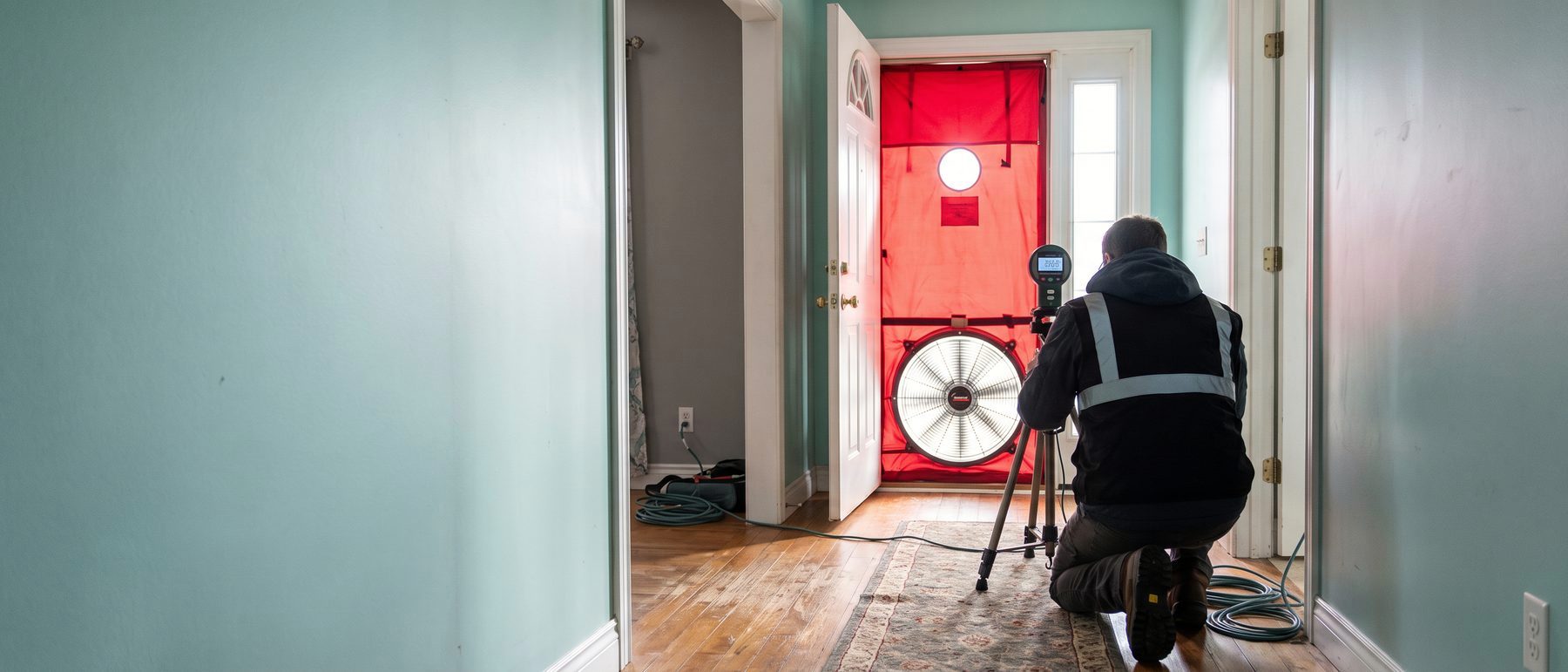
During the visit, the auditor looks over your past utility bills and checks the equipment in every room. One tool they use is a blower door, a large fan placed in a doorway that pulls air out and exposes hidden drafts. Other diagnostic tools the technician may bring include:
- An infrared camera that shows where walls have warm and cold spots because insulation is missing there.
- Non-toxic smoke pens and moisture meters that find tiny air currents and dampness near windows.
- Carbon monoxide and gas leak detectors that check whether the heating equipment you already own is safe.
To find local assessment programs, call your electric or gas utility, or use the directory of RESNET certified raters.
Measuring Efficiency With a HERS Rating
The industry standard scale for comparing your home's energy use with a similar reference house is the HERS Index. A certified RESNET rater compares your house with a computer model and produces one efficiency score:
- A typical reference home built to the 2006 energy efficiency standards earns a score of 100.
- A score of 70 means your house beats that standard new home by 30% on energy efficiency.
- A score of 130 means the standard home beats your house by 30% on energy efficiency.
On this scale, a lower number means the home uses energy more efficiently. The rater checks insulation levels and measures outside air leakage to work out where you sit on the HERS Index scale. They also test for leaky ducts, meaning heated or cooled air that escapes from the pipes feeding your rooms. The directory of RESNET companies can be searched by state or ZIP code to locate a rating business near you.
Home Energy Audit Rebate and Tax Credit Rules
There is no standard price for a private inspection set by federal agencies, so local contractors set their own rates. Homeowners could claim a federal tax credit worth 30% of the audit cost through the end of 2025. That credit paid as much as $150 under Internal Revenue Service rules, covering an inspection of your main home. Beginning in 2024, only a qualified home energy auditor could do the inspection if the homeowner wanted to claim it.
According to ENERGY STAR, that federal incentive covered only inspections finished between January 1, 2023, and December 31, 2025. Your local power company is your best option for a discounted checkup now that the federal tax credit has expired. If you call your state energy office or electric utility, you can ask whether they offer assessments free or at reduced cost.
Weatherization Assistance Program: Free Audits
The federal Weatherization Assistance Program offers income-qualified families a free computerized inspection along with free upgrades to their home. A local crew looks at your utility bills and tests your house with a blower door before putting in any upgrades. On their energy bills, participating households save at least $372 a year on average.
The Weatherization Assistance Program is open to homeowners and renters alike, though a renter must get written permission from the landlord before work begins. Either receiving Supplemental Security Income or earning no more than 200% of the 2026 poverty guidelines will qualify you. The base guideline in those 48 states, plus the District of Columbia, is $33,000 for a four-person household and $15,960 for a single person. States may set their limit at 60% of state-median income as well.
- To find your local agency, contact your state weatherization administrator.
- Submit proof of last year's income, for example pay stubs or social security statements.
- Sign up on the local waitlist, where households with disabilities, families with children, and older adults get priority.
Home Energy Audits: Frequently Asked Questions
What does the federal weatherization program cover in your home?
The program covers efficiency improvements that cut your utility bills and also protect your family's health and safety. Roughly 700 local organizations, funded through Department of Energy formula grants, treat about 32,000 homes every year. The District of Columbia, Native American Tribes, all 50 states, and five territories are all covered.
Before you install upgrades, is a home energy assessment worth doing?
Advisers at the Department of Energy say to get an assessment first, so the biggest leaks get fixed before you buy new heating equipment. More than 7.2 million families have been helped by the national weatherization program since 1976, and it now supports 8,500 jobs. Every $1.00 invested in weatherization brings back $2.78, in health and other benefits that are not energy-related, national evaluations have found.
For the weatherization program in Pennsylvania, what is the income limit?
Federal rules let Pennsylvania and other states qualify households at 200% of federal poverty guidelines. A 60% of state-median income limit from the Low-Income Home Energy Assistance Program is another option states may use. If a large share of your income goes to utility bills, local agencies also give you waitlist priority as a high-energy user.
What does a HERS Index rating usually cost a homeowner?
Because RESNET sets no single national price, each independent rating company charges according to the size and testing needs of your home. Member rating companies, not every individual certified rater, appear in the online RESNET directory. In your state, you can ask two or three of the listed companies for a price quote.
How is your home's efficiency score calculated by a certified rater?
The certified rater first measures duct leaks in the heating and cooling systems plus air infiltration, then feeds the results into rating software. The software takes the energy your home is expected to use and compares it with a same-size computer reference home built to 2006 standards.
Get installer quotes with your rebates included
Many heat pump rebates ask for an energy assessment first, and the installer's quote is where both come together. Tell us the ZIP code and what you want installed, and installers who work with these programs send a written price with the rebates taken off.