
What Size Heat Pump Do I Need?
A heat pump size calculator gives a rough first size for your home before you get installer quotes. It shows that size in tons and British thermal units.
No JavaScript? The sizing chart shows your size.
How cold do your winters get?
How well does the house keep heat in?
- Size of One Ton
- 12,000 BTU One ton moves 12,000 BTU of heat each hour, per Trane
- Rule of thumb for an average house
- 20 to 35 BTU Per sq ft of heated floor: 20 where it rarely freezes, 35 where winters are long and hard
- Load calculation
- Manual J The room-by-room method from ACCA that installers use; many local codes ask for it
- Federal 25C tax credit
- Ended No credit for installs after 31 Dec 2025; utility and state rebates still pay
Heat Pump Sizing Chart
These sizes are for an average house. They come from a simple BTU per square foot rule of thumb for each climate.
| Heated area | Mild, it rarely freezes | Some freezing nights | Cold, snow most winters | Very cold, long hard winters |
|---|---|---|---|---|
| 800 sq ft | 16,000 BTU: a 1.5-ton unit | 20,000 BTU: a 2-ton unit | 24,000 BTU: a 2-ton unit | 28,000 BTU: a 2.5-ton unit |
| 1,000 sq ft | 20,000 BTU: a 2-ton unit | 25,000 BTU: a 2.5-ton unit | 30,000 BTU: a 2.5-ton unit | 35,000 BTU: a 3-ton unit |
| 1,200 sq ft | 24,000 BTU: a 2-ton unit | 30,000 BTU: a 2.5-ton unit | 36,000 BTU: a 3-ton unit | 42,000 BTU: a 3.5-ton unit |
| 1,500 sq ft | 30,000 BTU: a 2.5-ton unit | 37,500 BTU: a 3.5-ton unit | 45,000 BTU: a 4-ton unit | 52,500 BTU: a 4.5-ton unit |
| 1,800 sq ft | 36,000 BTU: a 3-ton unit | 45,000 BTU: a 4-ton unit | 54,000 BTU: a 4.5-ton unit | 63,000 BTU: two units, 3 + 2.5 tons |
| 2,000 sq ft | 40,000 BTU: a 3.5-ton unit | 50,000 BTU: a 4.5-ton unit | 60,000 BTU: a 5-ton unit | 70,000 BTU: two units, 3 + 3 tons |
| 2,400 sq ft | 48,000 BTU: a 4-ton unit | 60,000 BTU: a 5-ton unit | 72,000 BTU: two units, 3 + 3 tons | 84,000 BTU: two units, 3.5 + 3.5 tons |
| 3,000 sq ft | 60,000 BTU: a 5-ton unit | 75,000 BTU: two units, 3.5 + 3 tons | 90,000 BTU: two units, 4 + 3.5 tons | 105,000 BTU: two units, 4.5 + 4.5 tons |
Download the chart: CSV · printable PDF
Rebates for the Size You Pick
The size you choose changes what the rebate pays.
Many utility programs pay per ton of capacity or per system, so a bigger unit can earn a bigger rebate, but only when the installer's load calculation supports that size. Most programs also ask for an ENERGY STAR certified or cold-climate model, and some want pre-approval before the work starts. The federal 25C tax credit ended for heat pumps installed after 31 December 2025, so the money now comes from your utility, your state and, if your income qualifies, the Home Energy Rebates.
Heat Pump Sizing Chart Rules and Tonnage Basics
A heat pump's heating and cooling power is counted in British thermal units, or BTU. A single BTU is a very small amount of heat. A one-ton heat pump moves 12,000 BTU of heat each hour. Tons describe heating power, not how much the machine weighs.
A basic heat pump tonnage calculator gives one ton for every 500 square feet of floor. Carrier suggests 20 to 30 BTU for each square foot. Treat any quick heat pump BTU calculator as a first guess. A floor-area shortcut leaves out your insulation, your windows and air leaks. In a Rewiring America study of Massachusetts homes, the 30 BTU rule for each square foot picked units 31,000 BTU too big on average.
Beyond the Heat Pump Size Calculator: Manual J Load Checks
The real answer to "what size heat pump do I need" comes from a room-by-room check, not a rough guess from floor area. Installers do this with ACCA Manual J, the national standard for this check. Building codes in most states and towns require it. It works out how quickly your home loses heat and gains it.
For the best fit, Rewiring America suggests adding two more steps to that check during the home visit:
- A blower door test puts a fan in an outside door for a short time to measure how much air leaks into your home.
- A Manual S calculation then matches a specific model to the heating and cooling need measured for your house.
A right-sized heat pump runs steadily, so you do not pay for capacity you never use.
Sizing a Heat Pump for a Cold Climate
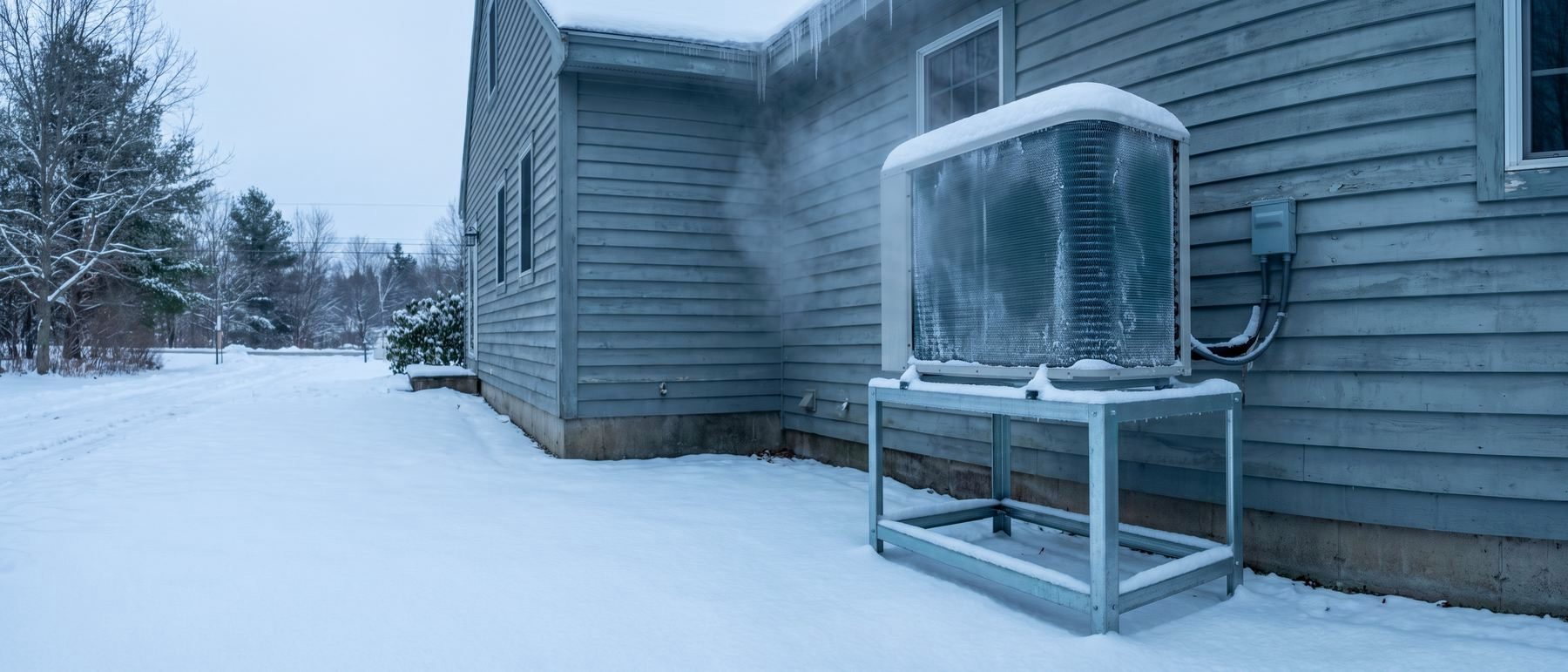
In most of the United States, a heat pump sized only for summer cooling will not keep your home warm enough in winter. In colder areas, the Building America Solution Center tells installers to use Manual J and size the system for winter heating needs.
Federal climate region guides split the country into eight climate zones based on rain and snow, average temperatures, and heating degree days. Heating degree days are a score for how cold and how long your winter is, counted from a 65°F outdoor starting point. Each year, a cold climate has between 5,400 and 9,000 heating degree days. A very cold one has 9,000 to 12,600. Cold-climate heat pumps keep making heat even on freezing nights.
Heat Pump Sizing Questions People Often Ask
How big a heat pump does a home of 1,500 to 1,800 square feet need?
Bryant says a three-ton heat pump delivers 36,000 BTU per hour and normally covers 1,500 to 1,800 square feet. Still, Bryant warns that a square-foot formula alone should not decide which unit you buy. If you only need to heat and cool one open space no bigger than 1,000 square feet, Rewiring America says a single-zone mini-split will work.
What does it cost to put a heat pump in a whole 2,000 square foot house?
Rewiring America finds that homes of 1,500 to 2,500 square feet usually pay $17,000 to $23,000 installed. The median, or middle, price is $19,500. For homes of 2,500 to 5,500 square feet, the median price is $25,000. Across the country, quotes on EnergySage average $15,393 before any rebates or other incentives. They range from $33,000 in New York down to $8,000 in New Mexico.
How do installers pick the right heat pump size for my climate?
First, installers look up the Department of Energy climate zone for your county. Every county has one, even in Alaska and Hawaii. If your climate zone is four or higher, the Northeast Energy Efficiency Partnerships group suggests equipment built for cold climates. If you go ductless, EnergySage says a typical system is around 3.7 tons, at an average of $4,944 per ton.
Get quotes from installers that include your rebates
A good installer checks the size on site before quoting, and many rebates set a size or efficiency rule. Tell us the ZIP code and what you want installed, and installers who work with your rebate programs send a written price for the right size with the rebates taken off.