
Federal Heat Pump Tax Credit (25C)
The federal heat pump tax credit no longer covers equipment placed in service after the December 31, 2025 cutoff, under Public Law 119-21. For a unit installed in 2025, you can still claim as much as $2,000 with your 2025 return.
- Tax Credit Status After 2025
- Ended Ended by Public Law 119-21 after December 31, 2025
- Heat Pump Credit Maximum Amount
- $2,000 Worth 30% of qualified costs on installs from 2023 through 2025
- Tax Form You Need
- Form 5695 File Part II, plus a 4-character QMID, along with your 2025 return
- Annual Credit Limit When Combined
- $3,200 Heat pumps capped at $2,000, plus $1,200 for other items
Installing in 2026? See the utility and state rebates for your ZIP code
If JavaScript is disabled, use the table of what pays now.
Who sends your electric bill?
What are you putting in?
Each Heat Pump Type: The Old Credit and What Pays Now
The tax credit is gone for installs from 2026. Utility and state rebates still pay, and income-qualified Home Energy Rebates are taking applications in 7 states.
| System | Federal credit (ended 31 Dec 2025) | Utility or state rebate now | HEAR, income under 80% of area median | HEAR, income 80% to 150% of area median |
|---|---|---|---|---|
| Central heat pump with ducts | 30% of the cost, up to $2,000 a year (25C) | Up to $8,750: Burlington Electric Department, VermontAbout $1,500 in a typical state that pays | Up to $8,000, and up to all of the costWhere your state is open | Up to $8,000, and up to half of the costWhere your state is open |
| Ductless mini-split | 30% of the cost, up to $2,000 a year (25C) | Up to $8,500: Sponsors of Mass Save, MassachusettsAbout $900 in a typical state that pays | Up to $8,000, and up to all of the costWhere your state is open | Up to $8,000, and up to half of the costWhere your state is open |
| Heat pump water heater | 30% of the cost, up to $2,000 a year (25C) | Up to $3,000: NorthWestern Energy, MontanaAbout $750 in a typical state that pays | Up to $1,750, and up to all of the costWhere your state is open | Up to $1,750, and up to half of the costWhere your state is open |
| Geothermal heat pump | 30% of the cost, no cap (25D) | Up to $40,000: Consolidated Edison, New YorkAbout $1,500 in a typical state that pays | Not covered as its own line | Not covered as its own line |
HEAR is taking applications in: Arizona, District of Columbia, Indiana, Maine, Michigan, New Mexico, New York, North Carolina, Rhode Island, West Virginia, Wisconsin. Every other state, with its official source, is in the Home Energy Rebates status table. Each household can get up to $14,000 in all, the rebate is paid through an enrolled contractor at the time of sale, and the heat pump has to be ENERGY STAR certified (see the efficiency rules).
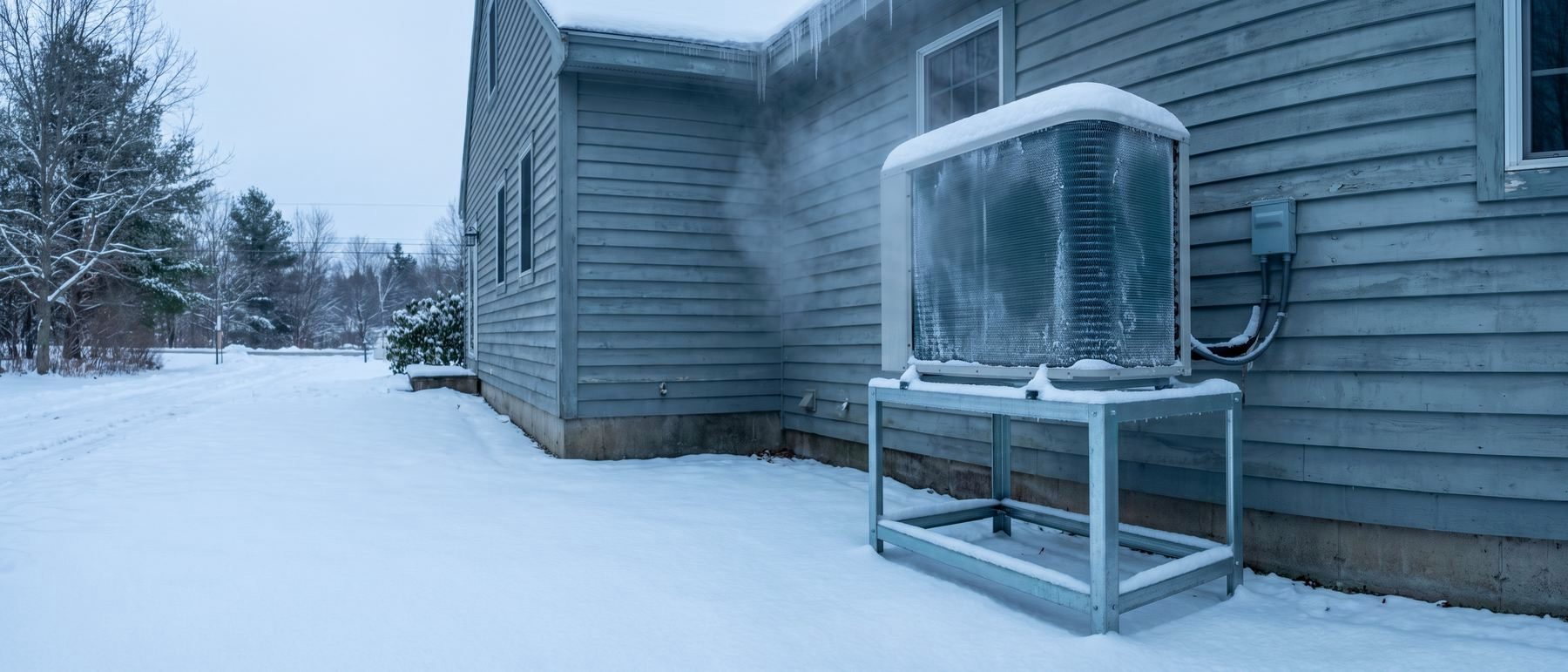
End of the Federal Heat Pump Tax Credit
The section 25C energy efficient home improvement credit was ended early by Congress in Public Law 119-21, signed July 4, 2025. That law is called the One, Big, Beautiful Bill, and it ended the credit after December 31, 2025. Equipment placed in service after that date does not qualify.
A unit counts as placed in service once it is fully installed in your home and ready to run. If you pay a contractor in 2025 but installation happens in 2026, IRS rules do not count it. If your installer completed the work from January 1, 2023, to December 31, 2025, the 25C tax credit is still available. The claim must be made for the year of installation.
Annual Limits for the Energy Efficient Home Improvement Credit 25C
For work finished from 2023 up to and including December 31, 2025, the IRS rule allows 30% of qualified costs, installation labor included. Three annual dollar caps applied to the section 25C tax credit:
- A yearly cap of $2,000 applied to biomass stoves or boilers, heat pumps, and heat pump water heaters.
- The annual cap was $1,200 for other energy property, with up to $150 allowed for a home energy audit.
- In a single year, the credits from all eligible home improvements together could not exceed $3,200.
Units had to reach the CEE highest efficiency tier, which is the top standard rating set by the Consortium for Energy Efficiency. Air source heat pumps rated ENERGY STAR Most Efficient qualified in 2025 when installed in an existing main home, and landlords were excluded. Being nonrefundable, the credit reduces your tax bill as far as zero and pays out no extra money. You cannot carry any unused credit into a later tax year.
How to Claim a 2025 Installation Using Form 5695
Claim a 2025 heat pump installation by filing Form 5695, Residential Energy Credits Part II, with the return covering 2025. Any item installed in 2025 needs a manufacturer with a signed written agreement with the IRS. Your unit's qualified manufacturer identification number, a QMID, must also go on the form; it has four alphanumeric characters. Only air sealing and insulation materials qualify without this code.
When working through your 2025 Form 5695 instructions, follow these three steps:
- Check your invoice, or the IRS qualified manufacturers list, for the four-character code from your manufacturer.
- Report the QMID on line 29a of Form 5695, along with the amount your heat pump cost.
- Save the contractor receipt and product paperwork among your tax records in case the IRS wants proof.
The Residential Clean Energy Credit and Geothermal Heat Pumps
A different federal rule covered geothermal heat pumps: the Residential Clean Energy Credit in Section 25D. The credit was worth 30% of the cost when new geothermal units met ENERGY STAR standards at purchase. For property placed in service or expenditures made after December 31, 2025, Public Law 119-21 ended Section 25D as well.
IRS rules treat an expenditure as made only once the original installation of the equipment is finished. A 2026 installation paid for in 2025 never counts. Excess unused credit from an eligible 2025 geothermal installation can be carried forward by the homeowner to future years, unlike under Section 25C.
After the Tax Credit: Utility and Home Energy Rebates
Federal tax credits are gone for 2026 installations, so homeowners now turn to utility rebates and state home energy rebates. Direct rebates often come from electric and gas utilities when you put in a qualifying high-efficiency heat pump. Local home energy rebates run by state efficiency offices also cut what you pay your contractor up front.
If you claim the energy efficient home improvement credit for a 2025 installation, check your rebate paperwork first. Under IRS rules, you subtract public utility subsidies used to buy or install clean energy property from qualified expenses. Take any nontaxable utility rebate off your total invoice before you work out your 30% credit on Form 5695.
Heat Pump Tax Credit Questions People Ask
Is a federal tax credit available if I install a mini-split heat pump in 2026?
Under 26 U.S.C. 25C, a ductless mini-split installed in 2026 earns no federal credit. The Form 5695 instructions call for one specific entry if you installed more than one mini-split during 2025. Your most expensive electric or natural gas heat pump that qualifies is the one to list: its QMID and amount paid go on line 29a.
Does the energy credit pay a $3,200 tax refund to every person who claims it?
No homeowner receives an automatic cash refund here. Even when 2025 upgrades hit the $3,200 annual combined cap on IRS Form 5695, the benefit only cuts tax owed. When the amount of your credit is larger than the federal tax you owe, the rest disappears.
Why was the 25C tax credit stopped before its original expiration date?
The credit was terminated after December 31, 2025, by Section 70505 of Public Law 119-21, which amended the tax code. To explain the transition rules, the agency released IRS Fact Sheet FS-2025-05 on August 21, 2025. Manufacturers are free of the periodic written report requirement for property that went into service before January 1, 2026.
How can I find out if a 2025 tax credit covers my brand of heat pump?
A unit counts for 2025 only when the brand of that unit shows up on the IRS qualified manufacturers list. The ENERGY STAR Most Efficient standard is one more requirement for air source models installed in 2025. If you own and share a home, look at the joint occupancy correction dated January 23, 2026, on the Form 5695 page.
Request Installer Quotes With Your Rebates Included
With the tax credit gone for new installs, utility and state rebates are where the money is, and most of them are paid through the installer or need the installer's paperwork. Tell us the ZIP code and what you want installed, and installers who work with these programs send a written price with the rebates taken off.